“His head on my knee can heal my human hurts. His presence by my side is protection against my fears of dark and unknown things. He has promised to wait for me… whenever… wherever-in case I need him. And I expect I will-as I always have. He is just my dog.” — Gene Hill
Since the day after Christmas, Violet has been fixated on her forthcoming April birthday. In her mind, turning four is monumental because she thinks that’s when she becomes a Big Kid.
She had me list the dates of everyone’s birthday in the family, just to see whose was coming before hers. Going through the list, it hit me: Cooper turns 11 this summer. Eleven.
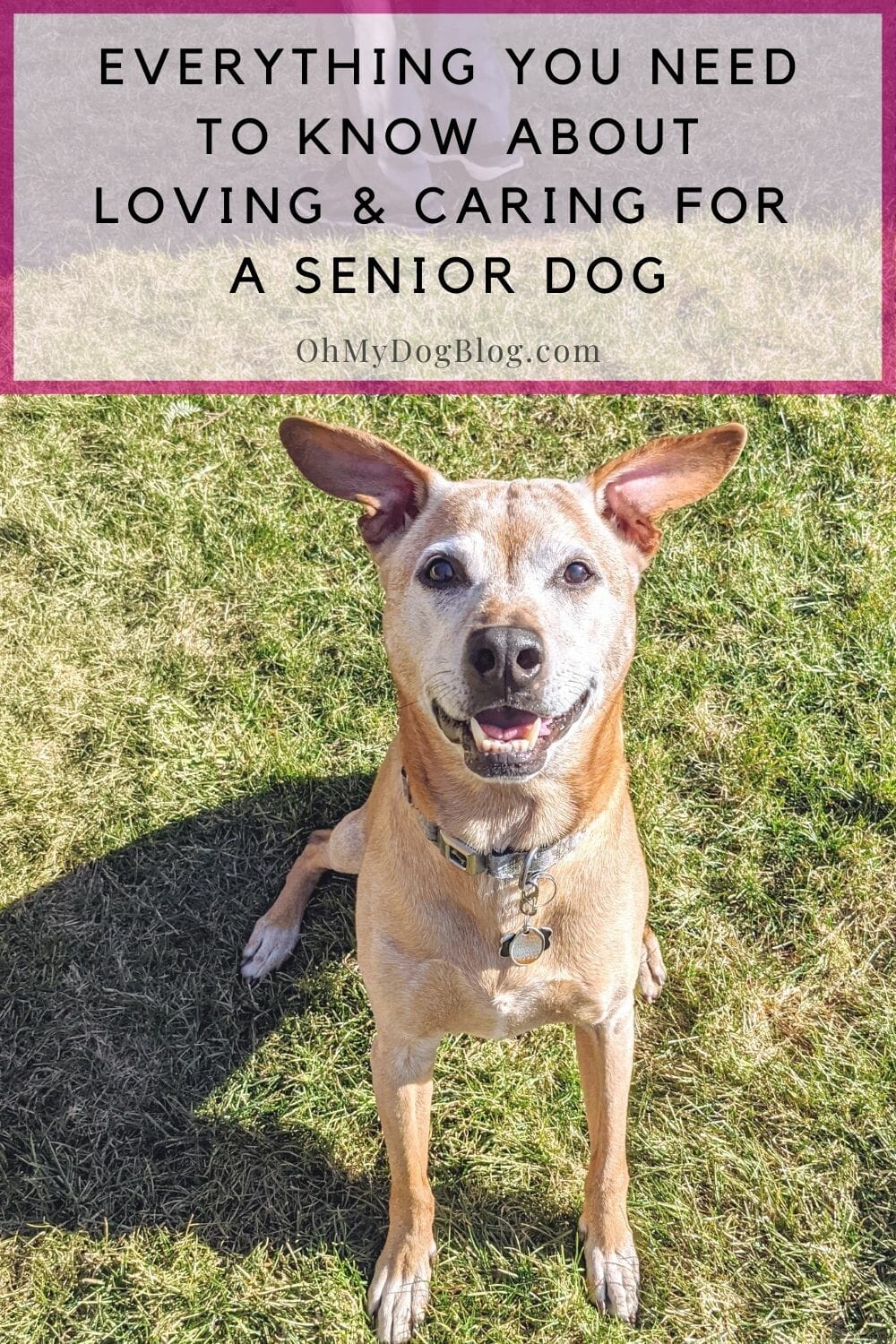
I suddenly realized: He’s not even really a newly senior dog anymore. He’s just an old dog. A sweet old man whose gradual aging slipped past me, I think, because we’re never apart from each other and the day-to-day stuff all blends and blurs together.
I’m so lucky to have this old dog in my life. There is nothing better than an old dog. But how on earth has my puppy become an old dog?!?! Have any of you felt that way about your old dog, too?
Senior dogs, generally speaking, are slower. They don’t need to rush through life at a frenetic puppy pace. They know what they like and what they don’t, and they seek out their preferences: specific people to cuddle, places to nap, toys to chew. They’re often calmer, wiser. A senior dog might not want to run a marathon alongside you, but he wants nothing more than to just be alongside you. They usually don’t gobble up furniture or dig holes in the yard or jump on your Aunt Gladys. The slower, gentler pace of life settles into their old bones. It’s a beautiful thing to pass the time with an old dog.
Sadly, senior pets often land in shelters when their owners no longer can or no longer want to care for them. The Chicago Tribune reported that senior pets make up about 5 percent of the shelter pet population. But, The Dodo cited, “Seniors make up the bulk of the 1.2 million dogs put down at shelters every year in the U.S.”
Let’s break down all the things that you might need to know about a senior dog so we can dispel some myths about caring for an old dog, share the joys of life with an old dog, and–perhaps–encourage someone to add a senior dog to their family!
As an Amazon Associate I earn from qualifying purchases. This site uses affiliate links, which means I may make a small commission on products purchased through links clicked on this site at no extra cost to you. This helps keep this site running, so thanks for your support in this way!
When is a dog considered a senior?
By most accounts, dogs are considered seniors after age six or seven. Large breeds age faster than small breeds, so there’s some wiggle room in that timeline.
The reality is a dog’s aging is just like a human’s. Some enter seniorhood strong, while others hit their golden years already tired.
There’s a lot you can do before your dog enters those older years to help him thrive. If your dog isn’t quite six or seven or maybe just celebrated those birthdays, take a good, honest look at his fitness. We’ll talk about this more, but it’s easier for a senior dog to be healthy if he ages with a good baseline of health. If your pup needs to lose weight or build strength, it’s easier on his body if he’s younger.
How to take care of a senior dog
As we age, our needs change. Same for our dogs. The food that served his body well as a young adult may need to change. The exercise routine that kept him fit may need to be adjusted. The once-a-year trip to the vet might need to become a bi-annual affair. While senior dogs can live long, happy, healthy, fulfilled lives, it’s up to us to tweak their care to ensure that happens.
Let’s dig into a few general categories–fitness, health and wellness, and fun–with specific ideas.
Fitness
Three years ago, John trained for a marathon. He was already a runner and completed several half marathons, but he decided to tackle the full. His training regiment built incrementally onto duration and distance. Throughout his training, Cooper ran alongside him–up until the 8- or 9-mile marker. Then, John decided Coop was done and brought him home.
Cooper would’ve run the full 26 miles if John let him. He would’ve run until he dropped. He still would–if we let him. But we don’t. Because we can see the dramatically elongated recovery time he faces after each run. We can see the soreness in his joints. We can also see the sheer joy he gets from running, so now we modify his runs to accommodate his almost-11-year-old body.
Fitness encompasses food and exercise, and both the food your dog eats and the exercise he gets contribute to his overall wellness.
The first place to start when assessing your dog’s fitness level? The vet.
We’ll discuss veterinary care in greater detail in the next section, but check in with your vet about your dog’s weight. Are there any concerns? Does he need to gain or lose a few pounds to be in better shape? Ask your vet for ideas. Some might be as simple as feeding less food. Others may include a specific exercise routine.
Many seniors do slow down. They live more sedentary lives, resting more and getting less strenuous exercise. It stands to reason, then, that their metabolisms slow down, too–just like our aging metabolisms! If you’re struggling to keep your senior’s weight down, here are three simple ideas that might help:
- Swap out store-bought treats for fresh fruits and veggies. Carrots, blueberries, apple slices, and so on all make excellent low-cal treats for pups who still deserve treats (i.e. all of them!) but also need to watch their weight. Here’s a list of 15 veggies to consider along with details on how best to serve them.
- Don’t skip the walks. It’s hard, I know. Our schedules are busy, the weather is bad, and the backyard is so convenient. However, for your dog’s longevity, take those daily walks. It’s great for him to keep his joints moving, his muscles working, and his heart pumping. Bonus points: Add a tiny bit of distance (one more block, two more houses, a second lap, etc.) or a second walk each day to really boost your dog’s fitness level.
- Be mindful of table scraps. We all do it: slip a bite under the table, set a bowl down for your pup to lick, drop a scrap and not bother to pick it up because, of course, the dog will get it. All those bits and bites add up. In our house, it’s the toddler and the preschooler who are guiltiest of this behavior, so we’ve started putting Cooper behind a baby gate during meals to keep him from getting too much. Plus, digestive issues are incredibly common among seniors, so fewer food oddities are in their best interest.
You might want to add in supplements, too, but talk that over with your vet first. Cooper takes a bunch, like probiotics, fish oil, and a joint supplement. Of course these are optional and depend on your dog and your budget.
Health and wellness
Your vet should be your partner in caring for your senior dog.
Your dog might have been one of the lucky ones, thriving on his once-a-year checkup and vaccinations. That’s never been our lot in life, but if it was yours–that’s awesome! Though be aware: Senior dogs need a lot more veterinary care.
First, most dogs need to go to the vet twice a year. One of those visits should include a blood panel, and it’s ideal to get a baseline when your pup is on the younger side of seniorhood.
Second, many aging pups experience similar side effects of getting older as we do, like:
- Diminished or lost vision
- Diminished or lost hearing (read more here about what to do if your dog is losing his hearing)
- Digestive issues
- Joint aches (read more about senior dogs and mobility)
- Obesity
- Heart problems
- Cancer
- Chronic conditions
And so on.
The incredible thing about veterinary medicine is that most of these things are treatable, manageable, even curable these days. Unfortunately, lots of senior dogs dumped in shelters are there because of these health conditions–either because of a misconception that they’re unable to take care of their dog’s condition, or perhaps that they’re unable to afford the care. Two suggestions to tackle the financial aspect of veterinary care for aging dogs:
- Consider starting a specific fund for your pet’s long-term care. There are a zillion apps these days that do small things like round up your grocery bill and sock away the difference, or you can set apps to auto-withdraw a couple bucks from each paycheck. Here’s a list of 13 apps to look into.
- If you truly can’t afford your dog’s care and something’s come up before you had the chance to save, first, talk to your vet to see if they can help you work out a payment plan. Or, consider applying from assistance. Here are two lists with lots of ideas: this one and this one.
I know many people utilize pet insurance, too. I have no first-hand experience so am hesitant to recommend any service. However, google something like, “pet insurance comparison,” to get a good overview and decide if it’s right for you.
And remember: A fit dog will cost less in veterinary care in the long run. It pays to keep your dog at a healthy weight, to feed him healthy food, and to get lots of exercise. It’s just like us, so think of it as paying dividends for your health, too!
Feed your pup the healthiest food you can afford. (More on choosing a food here.) Take lots of walks together. Keep up with preventative care. You’ll both be happier and healthier for it!
Fun
Obviously life isn’t just what we eat, how we exercise, or which doctors we see. However, those things weigh heavily on our overall wellbeing.
If you feel good, you can have more fun! For senior dogs, “fun” might not look like long swims in the lake or hours chasing a ball at the park. Or, then again, it might. Ensuring your dog has a great time throughout his golden years is one of the most enjoyable parts of loving an old dog.
When our beloved, belated Emmett was nearing the end of his life, he was around 14 years old, and his greatest joy was to find a patch of sunlight in the yard and bake his bones. Give him a squeaky tennis ball to chew like a piece of gum, and the boy was in heaven. We made sure he had the chance to do that as often as possible.
For Cooper, he still loves to run. We just keep them shorter–maybe two or three miles–and take him every second or third day. He also loves chewing his toys and playing tug (with this tug that we absolutely love), so those are part of his routine, too.
Whatever brings your dog joy, find ways to incorporate it into your daily routine, not just for special occasions. Every day is a special occasion.
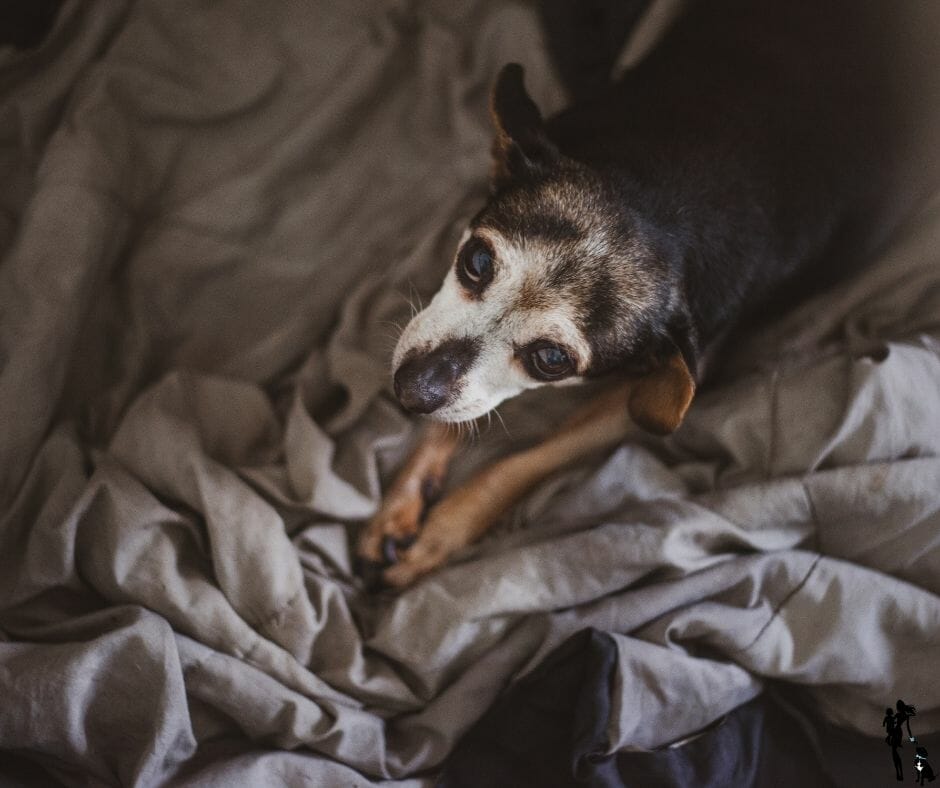
Happiness also means comfort. Maybe your dog needs a heated blanket or a cooling mat. Perhaps a bolster bed does the trick. Or maybe he just wants his fluffy blanket at the foot of your bed… and perhaps a ramp to help him get up there. Whatever makes him most comfy matters. Pay attention to where your dog prefers to doze and if he seeks heat or cold. See if you can adjust your home in small ways to make your pup more comfortable.
Adopting a senior dog
One of my goals in life is to adopt a dog from an animal shelter who’s in his last few years.
It breaks my heart to think of old dogs languishing in shelters, missing their people, confused and unsure about why they’re there. It must be terrifying for them. And just so sad.
If you have the lifestyle to add a senior to your family, you can find wonderful dogs in every shelter who are age six or above and ready to find a family. Many of them still have lots and lots of years ahead and many are still so full of life! And the ones who seem tired? Maybe a bit run down? Those ones are in need of the most love! In my heart, we’ll adopt an old dog–not a six or seven year old, but a 12 or 14 year old–and help usher him out of this world on a happy, positive, loved note. That’s not for everyone, but you can’t beat adopting a six-plus-year-old who’s probably already house trained, probably calmer than most puppies, and probably ready to settle into whatever your lifestyle holds.
Something I hear often about adoption seniors: Won’t it be so expensive? Old dogs must cost so much!
Well, sure, but also… you can not predict how much a puppy will cost. Adopting a puppy guarantees nothing. Your puppy might eat your couch and drywall, or he might not. He might need surgery to remove a Christmas wreath from his stomach, or he might not. He might ruin your living room carpet or come with a chronic disease or be afraid of thunder, or he might not.
That senior you adopt might live to 20, or he might not. He might develop cancer, or he might not. He might prefer to snooze on the sofa all day, or he might not.
My point, of course, is that nothing in life is guaranteed, even the health of a puppy or the longevity of an old dog. If that is your concern, dismiss it now because you just never know what life holds, so why let that worry hold you back?
Saying goodbye
“Dogs come into our lives to teach us about love and loyalty. They depart to teach us about loss. A new dog never replaces an old dog; it merely expands the heart. If you have loved many dogs, your heart is very big.” — Erica Jong
Of course, when we love an old dog, we eventually have to say goodbye.
Dogs’ lives are woefully short, and the grief is intense. It’s commensurate with the amount of love we get from them during their lives.
As hard as it is to say goodbye, it’s also one of the blessings of loving an old dog. We are able to fill them with love and light as we see them through the very end.
Before you get to that point, speak with your vet. Find out what kind of options you have before any decision-making becomes critical–if possible. It might not be. But it’s nice to plan ahead if you can. Your vet can help assess your pet’s quality of life, too, if you’re unsure.
There’s no question: The end is hard. But I like to focus on the honor and privilege of helping our dogs pass away with dignity and love.
The joys of loving a senior dog (hint: there are MANY!)
Beyond the intense grief of saying goodbye, the absolute greatest pleasure in life is loving an old dog. Not in any order and without preamble–other than to say that these are generalities and vary by individual, of course–here are 14 reasons why loving a senior dog is joyful:
- Old dog snores. So peaceful.
- They’re generally far less destructive than their younger selves.
- Watching them rest… they’ve earned it and they’re so stinking sweet when they doze.
- Walking at their pace. Take in the world at a slower, more relaxed clip. It’s life changing.
- They know you better than any other living creature–they’ve seen it all–and you know them inside and out. A perfect partnership.
- Spoiling them with their favorite treats: an ice cream in the drive-thru, a cookie in the sun, whatever they love most.
- They. sleep. in.
- It takes less time and effort to wear them out. And, therefore…
- More cuddles and snuggles! Much more couch time with a senior dog.
- Sunspot naps.
- Anticipating their every move: what sounds will make them bark, what snacks they want and when, where they’ll turn on the neighborhood stroll.
- Glimpses of their younger selves as they find little moments to skitter and play.
- They’re happy to do what you want to do, as long as you’re together.
- Slow is a perfect pace.
Your turn!
I’m sure you can think of many more! In fact, please do! Leave all your reasons why YOU love senior dogs in the comments below. Likewise, let me know what questions or comments you have about senior pups, or share your experience with loving senior dogs!
Resources
To learn more about senior dogs, or simply to enjoy them even more, here are a few resources to further your education.
My Old Dog by Laura Coffey
Good Old Dog by the staff of the Cummings School of Veterinary Medicine at Tufts University
What a beautiful post! I can’t believe both my girls are senior dogs now, at 12 and 13 – I keep asking myself where all the time went. My Husky is 12 but she clearly doesn’t see herself as a “senior dog” and neither does anyone else! She is still so full of energy, life and love. I hope to have many more years with her. I’ve been reading about a lot of dogs who have been living to 19 and 20. That is my hope and my prayer for my dogs. Both are in great health and love our fun daily activities together. I hope to adopt a senior dog from the shelter as well to add to our family. I will ask them who is on the “e-list”, which is the euthanasia list. As a shelter volunteer for 8 years I saw the heartbreak of older dogs being passed over for puppies and young dogs. Some people don’t want an older dog. I find that ridiculous, many older dogs are there simply because their owners died or could no longer care for them. They’ve lived in a home for years and have been great pets. They deserve a second chance with another family or person.
My dog is 9, the vet called her lab work a senior panel when she was 7, I was confused at that. Most people think she is a puppy, she still has a lot of energy when we are out, at home she mostly rest peacefully, guarding the courtyard and greeting all who walk by. Only I notice the white eyelashes that have always been dark brown, the stiffness to her running when chasing the ball, the creaking joints and her love of laying by the heater. I love that no matter where I am, I can look up or down and will find her close by, mostly watching me! She is beautiful, and I am lucky!
“Every day is a special occasion”. YES!!!!! I can’t believe that Cooper is almost 11. How did that happen!
What a beautiful post. We love our seniors, and weep when we lose them, and then go out and do it again. Love the Erica Jong quote.
this post was great! i have a senior dog (12yo) and all these points were spot on. senior dogs are definitely set in their ways but they do enjoy you in a completely different way than they did when they were younger.
thanks again for this post!
We have adopted senior and hospice pups for the last 10+ years. It has definitely had it’s ups and downs! 8 years ago we had too many deaths in a row so we decided to adopt a younger dog, like 5 or 6. What we found was a 2 year old papillon/dachshund mix who was having trouble finding a permanent home. We named her Czarina, Zari for short. She taught our 10 year old Shadow (adopted at 7) how to play, woke us up every morning with a beautiful smile and 2 years later, at 4, died of cancer. It really doesn’t matter about age or breed or anything except the willingness to let more love in your life. You get that and more with senior dogs. All we ever hope to do is give each of them their best life ever. Thanks Maggie for encouraging and promoting senior dog rescue. It might save some more!
This is a lovely blog, it brought back so many memories of my senior boy who I lost last year. His last year was the best, I took him everywhere and when he couldn’t walk far he rode in a stroller.
I was often asked how old my puppy was and people were shocked when I told them he was 14!
I have a senior dog named JoJo. I love him a lot. Thanks a lot for sharing this information.
Senior dogs are the best. We have a 15 year old Blue Heeler mix (Lulu Belle) and a young senior, Stevie Ray (10) who are headed out this summer on a road trip if they are still in good health. Thanks for the article!
I am planning to raise a senior dog breed and I think this article will help me a lot. Thanks for this useful post
Thanks for the recipe, We love our senior.
Currently taking care of 3 seniors right now. Doberman, Husky and Lab. I love them so much. Thanks for this!
I recently got an elderly dog. He is little overweight. I’m giving him Pro Plan dog food and bringing him for morning walks.
Beautiful words. I have just had a whole argument with someone why I will never add to the cycle of misery caused by the puppy industry. It’s not because I’m a good person, it’s because older unwanted dogs are the most wonderful companions for all the reasons you say.
My Nakia is 18 years old. She’s a border collie/min pin or something?! mix. She was a rescue. She’s deaf and almost blind because of cataracts. I love her so much! Yes she can be a Lot sometimes, but most of the things she deals with are things that I’m dealing with too. I’m 70 and we have many of the same physical difficulties. Hard for us to walk, arthritis, cancer, having to get up at night to pee etc! I’m crying right now just thinking about us, as she is curled up by my side. Yes, I’m limited to the time I can be away from her-she needs to go outside every 2-3 hours sometimes and she gets spooked when she’s alone for long periods of time. But I feel so honored to be the one who cares for her on her journey. It makes my decline much easier and infinitely more enjoyable.
So much love to you and Nakia. That feeling of honor is so very profound.
love the list! especially #1 (as i’m actively reading this with my senior dog snoring against me on the couch lol)